
Talbot Projected and Actual Release Dates
A projected release date is a forward-looking calculation. It can reflect the controlling sentence, credits, legal restrictions, and information known when the record was updated. An actual release date records an event that already happened. Those fields must not be merged. A projected date can change, while an actual date should identify the completed custody event documented by the responsible agency.
A pretrial person at Talbot County Jail often has no computed release date. Custody may end when bond is posted, a hold clears, charges are dismissed, a court enters an order, or another agency takes custody. A court date is not a jail release date. A bond decision may permit release, but physical discharge occurs only after the jail finishes its process and checks other holds.
A sentenced county inmate may have a local sentence calculation, yet Talbot County publishes no public calculator or sentence-computation policy. Ask the sheriff and sentencing court what record controls. For a Georgia state prisoner, GDC computes custody and sentence data. The Parole Board separately decides discretionary parole timing.
- Projected release date
- An agency calculation based on current sentence information.
- Actual release date
- The recorded date custody ended for that agency.
- TPM
- A Tentative Parole Month for final Board review, not a promised release day.
- Detainer
- A request or hold from another authority that can change the destination at release.
Find a Talbot County Release Date
Start with custody type, not a broad name search. The Talbot sheriff controls local jail custody. GDC controls state prison records. The Georgia State Board of Pardons and Paroles controls parole decisions and TPM data. BOP controls federal prison dates. Each system uses its own fields and legal rules.
- Confirm the person's identity with a full name, date of birth, booking number, case number, or offender ID.
- Ask the Talbot County Sheriff's Office whether the person remains locally held, is pretrial, or has a county sentence calculation.
- Check the sentencing court record for the sentence, bond, amended order, probation, revocation, or disposition that controls local custody.
- For state custody, open the GDC offender query and match the correct person by identifiers.
- Copy any maximum, projected, or other release-date label exactly as displayed. Do not rename one field as another.
- Use the Inmate TPM Lookup only for parole timing. Treat its month as tentative.
- Confirm the latest date and any hold with the agency before arranging a pickup or relying on the result.
The GDC Offender Info page links the state offender tools and the Performance Incentive Credit program.
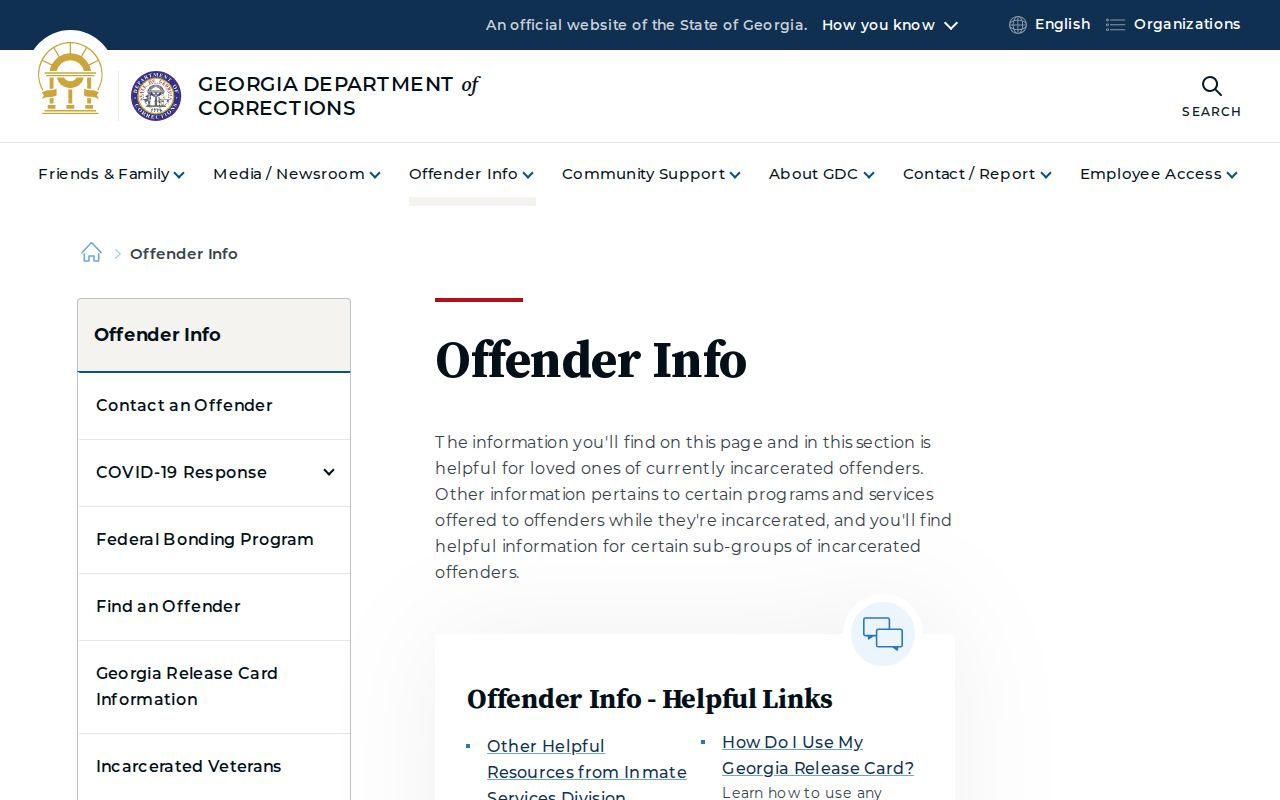
The state source helps route a GDC search. County-jail, parole, and federal dates still require their own systems. A broader search for past release records appears on the Talbot County released inmate search.
Georgia PIC and Talbot Release Timing
Georgia release-date explanations require care. GDC describes the Performance Incentive Credit Program, or PIC, as a way eligible people may reduce length of stay through satisfactory progress in approved programs, assignments, and good behavior. PIC is a possible sentence-length factor, not a fixed subtraction that applies equally to every prisoner. Eligibility, recognized progress, discipline, and the controlling sentence all matter.
The Parole Board also states that rehabilitative efforts can advance a TPM by a limited number of months in some cases. That is Board parole timing, not the same calculation as a GDC projected date. A TPM remains conditional on final review, conduct, and completion of any required counseling or other preconditions. Misconduct can lead to postponement or cancellation.
Georgia should not be summarized as a universal rule that everyone serves 85 percent. O.C.G.A. 17-10-6.1 imposes strict service and parole limits for serious violent felonies. Other sentences may fall under different statutes and discretionary parole rules. The offense, sentence wording, offense date, repeat-offender provisions, and statutory exceptions must be checked before any percentage is used.
O.C.G.A. 42-9-45 gives a general parole eligibility rule for many felony sentences of nine months or one-third of the sentence, whichever is greater, subject to exceptions. Aggregate sentences of 21 years or more have another general eligibility provision, also subject to serious-violent and repeat-offender limits. Eligibility only allows consideration. It does not require release.
The serious violent felony statute is an important limit on early release.
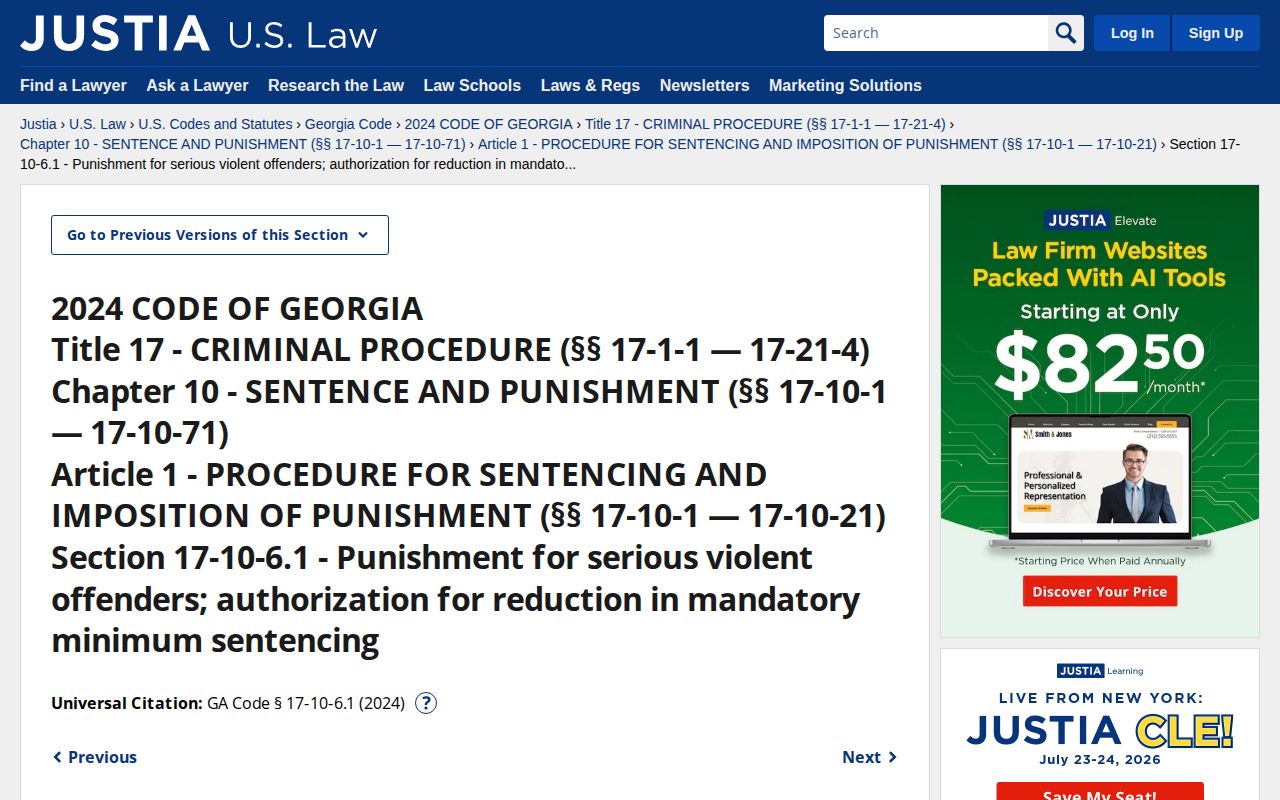
The statute image reinforces why offense-specific law controls. It does not supply one release date without the judgment, sentence, credits, and agency calculation.
Why Talbot Release Dates Change
A projected date is a snapshot of the current record. New discipline, credit decisions, legal orders, or holds can alter the result. Some changes affect the date. Others affect where the person goes when the original agency ends custody.
| Factor | Possible effect |
|---|---|
| Disciplinary report | Can affect credit and postpone or cancel a TPM |
| PIC or recognized progress | May reduce length of stay or advance parole timing when allowed |
| Required treatment or residence plan | Incomplete preconditions can delay parole release |
| Detainer or hold | May send the person to another authority instead of the community |
| Court correction or new order | Can change the sentence or release authority |
| New charge or revocation | Can add custody or change the controlling case |
| Parole decision | The Board may grant, deny, postpone, cancel, or withdraw action |
| Federal recalculation | BOP dates may change after federal credit review |
The Parole Board explains that a detainer does not automatically prevent parole consideration. A person may be paroled to the detainer through a conditional transfer. In that event, parole from the Georgia sentence does not mean arrival in the community. The receiving authority controls the next custody record.
County jail timing can change more abruptly than a state-prison projection. Bond may be posted, a hold may clear, a judge may enter an order, or another agency may arrive. Since Talbot County publishes no local calculator, direct jail and court confirmation is essential.
Confirm Talbot County Release Timing
Check the date again close to the expected event. For a county jail release, call the sheriff and ask whether release processing is complete and whether another hold remains. For state custody, compare the current GDC record with Parole Board information when parole applies. A TPM can be postponed or canceled before its effective release.
Register through the VINE Inmate Check for a supported custody-change alert concerning one person. VINE can lag and may not show the legal reason behind release. Treat an alert as a prompt to call the reporting agency, not as the final sentence record.
Georgia Code 42-5-9 addresses GDC projected-release notification to law enforcement and victims who requested notice. It does not promise that every public search result always displays a single final date. When a GDC field is missing or unclear, use the state agency's records process rather than estimating from the sentence.
Talbot TPM Versus Release Date
The Georgia Board defines a Tentative Parole Month as the month when it expects to complete final review and, if appropriate, establish a parole release date. It is not a final decision. Good conduct and any stated preconditions remain important. A reader should never convert the month into the first day, last day, or another guessed date.
Georgia's ordinary parole decision is a file review. A person in prison does not appear before the Board for a routine parole hearing. Members review and vote individually. For eligible non-life cases, the Board may set a TPM or deny parole. It may also reconsider, postpone, cancel, or withdraw a grant before release.
Life-sentence timing for serious violent felonies depends on the offense date. Board guidance describes different eligibility periods for pre-1995 cases, cases from 1995 through the period before July 1, 2006, and offenses on or after that date. These are eligibility points, not automatic release dates. The current law and the person's sentence must control.
Release Dates Across Talbot Systems
| Custody system | Correct date source |
|---|---|
| Talbot pretrial jail | Sheriff custody confirmation and court bond or release order |
| Talbot sentenced jail term | Local jail calculation and sentencing court record |
| Georgia state prison | GDC offender and sentence record |
| Georgia parole consideration | Parole Board TPM and final decision |
| Federal prison | BOP Inmate Locator and federal sentence record |
| ICE or federal hold | Responsible federal locator or direct agency confirmation |
BOP may display a federal release date, and its records note that dates can change through federal recalculation. That date does not describe a Talbot County jail stay or Georgia parole. ICE and U.S. Marshals custody have still different records. Identity and agency must be established before comparing dates.
After release, the durable record may show the actual date, release type, facility, and supervision. If a projected date later differs from the actual event, preserve both labels and their source. One documents the earlier estimate; the other documents what occurred.
Note: A date without its agency label can mislead, especially when a transfer ends one custody term and begins another.
Talbot Jail Release Date Checks
A local jail inquiry should separate authorization from execution. A judge may set bond or enter a release order, yet the jail must still confirm identity, process paperwork, and check for warrants or holds. The court timestamp therefore may precede physical departure. Ask the sheriff for the actual release entry and ask the clerk for the order when both times matter.
For a county sentence, request the sentence and any amended order before trying to count days. Concurrent and consecutive terms, credit for time already served, revocation, and another pending case can affect the record. Talbot County has not published an online formula that would support a reliable private calculation. The jail and court should explain which official record carries the current date.
A release that occurs near a weekend or holiday also should not be moved to a guessed business day. No research source establishes a special Talbot weekend-release formula. The controlling order, jail process, and any hold determine the event. Call close to the expected time and avoid arranging transportation until staff confirm that discharge is complete.
If local custody ends through transfer, record both events: the actual Talbot departure and the receiving agency's status. A GDC admission date, federal transfer, or another jail booking is not a correction to the Talbot release date. It is the next link in the custody chain. Keeping each agency and timestamp separate makes the record understandable later.